Thursday, November 27, 2014

Learning in a Whole New Way... it's still "on"

In this November, I had the opportunity to share at the SAGE-iSummit 2014 in Beijing. It's a pleasure to be invited to share with a bigger audience the good work we carried out in the school since its inception in 2009. It's valuable as not many would have the opportunity to start a school from scratch, and the learning was tremendous.

Click HERE to find out more.
Thanks to fellow ADE Douglas Kiang (from Punahou School) who puts down the key points in a pictorial form :)


Monday, April 14, 2014

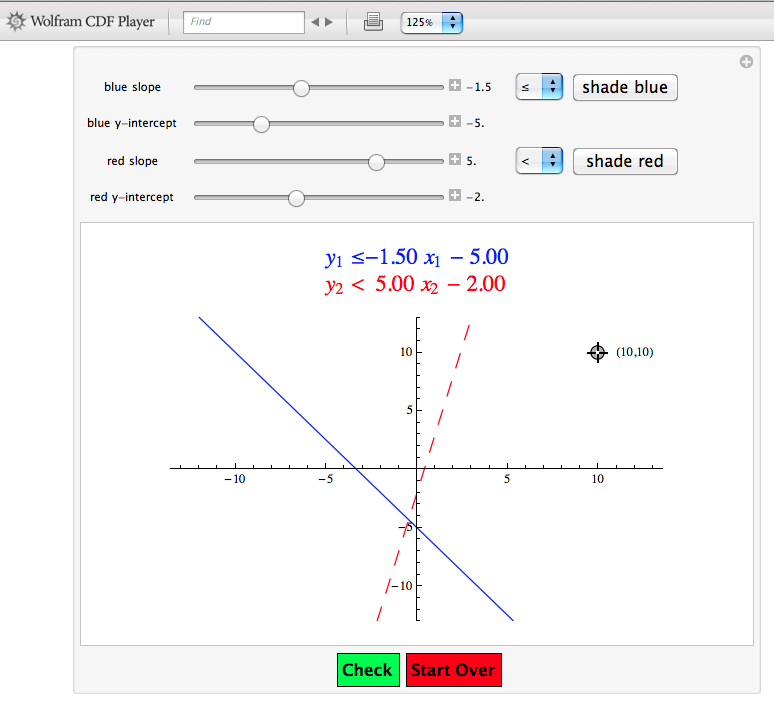
Mathematical Software: Wolfram CDF Player

A powerful mathematical software - dynamic (that runs in java) and can be embedded into websites pretty easily.

Ease for implementation
  • Create a presentation file (CDF) where the applets could be embedded for access and manipulation.
  • To run the CDF file does not require the editor; the reader only needs to download the CDF player (see link below) to access and manipulate.
Useful Links (access via Firefox)
Sample created and shared by Boon Tat

Sunday, April 13, 2014

Sharing @ iCTLT 2014 on Digital Citizenship


In the recent years, Digital Citizenship is gaining more attention as educators start to direct their focus on the learners (of technology) in today's context, a move onward, after placing so much emphasis on how to deliver the technology-enhanced learning experiences in the past few years.

Well, the use of technology to create an effective and beneficial learning experience is still an important area. Nevertheless, now the emphasis has gradually been broadened to include the learners, looking at how technology has influenced them and their well-being. There is also greater emphasis of the cyber wellness in schools today.

The move of further broadening Cyber Wellness to Digital Citizenship programme is one way to see the well being of individuals in a more holistic manner, not divorcing the "real" and "virtual" selves.

Some individuals might think, Physical well-being and Cyber well-being are mutually exclusive. However, with technology penetrates into our livelihood (in different forms), we cannot afford to turn a blind eye to it. No matter what, it impacts us directly or indirectly. It's no doubt, part of our environment. Environment is not just the 'space' that we are in physically. It includes people around us, as well as the culture that we are immersed in. People, of course, it includes their mindset and behaviour.

Recognising this, there is no doubt that school plays an important role in shaping one's attitude and behaviour. How to approach Digital Citizenship programme? Not just directly on the students, but also the people around them. In addition, leveraging on the programme, we could further level up the capacity of our students, who are in the forefront of the programme. Hence, it's not just digital citizenship programme, but also student leadership development programme :)

Click HERE to view the presentation (by Johari & myself)

Saturday, March 01, 2014

Interesting Development in GoogleMaps

This was introduced by a GCT (who turned Googler) at the GCT Group.

Compared to the GoogleMap we know 2 years ago, the Map Gallery is so much more dynamic and has so much potential for classroom teaching and learning.

When click at specific area, comparison graphs are displayed.
Looking at some of these additional features, could you think of ways to bring GoogleMap gallery into everyday clssroom?


Tuesday, October 15, 2013

Re-assessing: Purpose of Activities - to open up possibilities

Article:  23 iPad Alternatives to the Book Report

Book Review (or Book Report, in this case) - We'll usually associate it with lines and lines of words. 
Let's re-visit the purpose of the activity: 
- It's about drawing out key ideas from the reading?
- It's about synthesising? 
- It's about developing communication skills?
- It's about cultivating creativity in expression?
... or it's about practising summary skills (which I think that's what the teachers had in mind all this while, especially in my school days)?

With technology use, we could do it differently! and we could definitely do more! So, we really need to be clear of the purpose of the activity, and not be greedy to accomplish too many at one go, else, we may lost sight of what we want to achieve.

The article gives some suggestions how a Book Review could be presented differently. 
Well, this 'model' of thinking is not limited to "Book Review". It could be applied to other contexts too!

Some Thoughts: What to consider for eBook implementation

The article listed 14 things that we should look at before implementing eBooks (schoolwide):

I think, the key considerations before we embark on the project would be 
(1) Purpose - not just for 'convenience', but what else (experience) eBooks can provide that traditional hardcopies can't. At the same time, we also need to know what are the experiences that we'll be omitting when not using the printed version.

(11) Instruction - how would classroom instruction change with the new media. Not so much of how to manage the 'hardware', but what else we could do that previously we can't do with the hardcopies? What are some 'strategies' that works in the past now no longer works. We have to be mindful of these. Else (borrowing an analogy I read from another book, no matter how good and reliable a 'delivery service' is, if fails when there is no recipient to receive the goods.

(12) Roll-out plan - planning is important. More importantly, the need to monitor the implementation and gather feedback from both teachers and students are important so that the process could be refined over time. Else, some sceptical people would take opportunity to pass death sentences to the initiative. 

(13) Professional Development - Do not undermine this, although many a time, those who 'push' for the implementation might "sell" it such that it's idiot-proof, or it's soooo.... simple to use. PD could include the change in mindset and the building of a community to support the change, the change for the a better learning experience for the students, and a better delivery experience for the teachers.  

~~~~~~~~~~~~~~
Below are the 14 things listed in the article 

1. Purpose
2. Devices/Portal
3. Content Decisions
4. Funding (long term/short term)
5. Pricing
6. Ownership of content
7. Formats
8. Number of circulations
9. Number of access at one time
10. Enhancements
11. Instruction
12. Roll out plan
13. Professional Development
14. Publicize it!

Sunday, October 06, 2013

Technophobe vs Technophile

Source: http://inservice.ascd.org/technology/are-you-a-technophobe-or-a-technophile-in-the-classroom/

According to online Oxford dictionary,
a technophobe is a person who fears, dislikes, or avoids new technology
while 
a technophile a person who is enthusiastic about new technology

The write-up in the above link succinctly highlighted the response/ reaction of each of these people when technology fails to work out at the 'critical moment' that it should prove itself worth the use (in the eyes of the technophobe).

Well, it's about attitude, I think, for a technophobe to acknowledge the fact that technology is here to stay and it's no point trying to prove its 'unworthiness' by all his/her means. Instead, these people should sit down, take a deep breath, and take a good look at what it is and accept that they have no choice, but to be eventually be immersed and embrace it... else, one would be there to wait to be drowned by it.

Saturday, September 28, 2013

Online Comments: Kill them or Fix Them?

Source: The Straits Times, 2013, Sep 28 - Opinion A41


When things go wrong, there are 3 possible reactions:
1. Immediate retreat to the previous state
2. Do nothing and believe that things will be alright after a while
3. Respond to fixing it

The article talks about dealing with online comments - in particular the undesirable (or less desirable) ones that would create a negative impact on the original posting.

Quite often, the first reaction would be immediate retreat to our comfort zone, especially when the 'chaos' or difficult situation arises from the introduction of some new elements, especially technology. Indeed, this act of "undo" the most convenient way of eliminating the new problem(s), which is most people would choose.  Back to status quo.
  • If we choose this approach, then we have to ask ourselves, have we done enough -  how deep or thorough have we thought through our implementation plan before we execute it? This is the issue with many - that I have countless encounters. 
  • Because of this 'incompetence', some well-intended plans 'die' because of incompetent implementers who would blame the whole world except themselves when things did not turn out as it should be. They only look at "intent", "plan" and "outcomes" and assume that others will respond (as they had expected) according to what's plan, and therefore not putting enough effort to follow-through and manage the implementation process.
For instance, one wanted to impress others how he/she can use a collaborative tool to do monitoring and improve efficiently. Unfortunately, he/she failed to figure out properly how the technology worked (and in fact, it was not the appropriate choice!) before a massive implementation. As a result, it caused inconveniences (and led to frustrations) to the entire group of personnel involved. At the end of the day, the implementation died and the monitoring discontinued. What's the follow-up? I wonder. What's the 'judgement' passed to the technology (from his/her perspective)? We can guess.

"No reaction" sometimes is the "best" reaction. However, here, "no reaction" does not mean really sitting down there and do nothing. It's more like a delayed "wait-and-see" reaction, with behind-the-scene work carried out along the way. This includes close monitoring and planning for the next step. It should not jump into the conclusion immediately and hence make a judgement.

Respond and "fix it" is to address to the concerns immediately. There are occasions that we have to do this so that prevent the current situation from worsening and further damage to the well-intended plan.

Indeed, the article argues on how the agency could have dealt with such comments.

In fact, looking at online comments, when one is prepared to let others comment online, just wondering how 'prepared' they are in terms of receiving different kinds of comments. Nobody would reject compliments (I'm sure). Neutral comments are fine. How about adverse comments? Are we prepared to 'broadcast' it at our online sites? I wonder. Well, even for adverse comments, are we ready to treat this as an opportunity, 'wait-and-see' and allow the online 'community' to moderate and bring 'justice' to the 'adverse' ones in its natural course? I wonder.


Online Comments: Kill them or Fix Them?

Source: The Straits Times, 2013, Sep 28 - Opinion A41


When things go wrong, there are 3 possible reactions:
1. Immediate retreat to the previous state
2. Do nothing and believe that things will be alright after a while
3. Respond to fixing it

The article talks about dealing with online comments - in particular the undesirable (or less desirable) ones that would create a negative impact on the original posting.

Quite often, the first reaction would be immediate retreat to our comfort zone, especially when the 'chaos' or difficult situation arises from the introduction of some new elements, especially technology. Indeed, this act of "undo" the most convenient way of eliminating the new problem(s), which is most people would choose.  Back to status quo.
  • If we choose this approach, then we have to ask ourselves, have we done enough -  how deep or thorough have we thought through our implementation plan before we execute it? This is the issue with many - that I have countless encounters. 
  • Because of this 'incompetence', some well-intended plans 'die' because of incompetent implementers who would blame the whole world except themselves when things did not turn out as it should be. They only look at "intent", "plan" and "outcomes" and assume that others will respond (as they had expected) according to what's plan, and therefore not putting enough effort to follow-through and manage the implementation process.
For instance, one wanted to impress others how he/she can use a collaborative tool to do monitoring and improve efficiently. Unfortunately, he/she failed to figure out properly how the technology worked (and in fact, it was not the appropriate choice!) before a massive implementation. As a result, it caused inconveniences (and led to frustrations) to the entire group of personnel involved. At the end of the day, the implementation died and the monitoring discontinued. What's the follow-up? I wonder. What's the 'judgement' passed to the technology (from his/her perspective)? We can guess.

"No reaction" sometimes is the "best" reaction. However, here, "no reaction" does not mean really sitting down there and do nothing. It's more like a delayed "wait-and-see" reaction, with behind-the-scene work carried out along the way. This includes close monitoring and planning for the next step. It should not jump into the conclusion immediately and hence make a judgement.

Respond and "fix it" is to address to the concerns immediately. There are occasions that we have to do this so that prevent the current situation from worsening and further damage to the well-intended plan.

Indeed, the article argues on how the agency could have dealt with such comments.

In fact, looking at online comments, when one is prepared to let others comment online, just wondering how 'prepared' they are in terms of receiving different kinds of comments. Nobody would reject compliments (I'm sure). Neutral comments are fine. How about adverse comments? Are we prepared to 'broadcast' it at our online sites? I wonder. Well, even for adverse comments, are we ready to treat this as an opportunity, 'wait-and-see' and allow the online 'community' to moderate and bring 'justice' to the 'adverse' ones in its natural course? I wonder.


Trust is a many-splendoured thing

Source: The Straits Times, 2013, Sep 28 - Opinion A39


The context of the article is about trust being one key indicator of good governance - when people place trust in the governing party for being competent, honest and benevolent.

On the other hand, it can easily and suitably be re-contextualised at the individual's or organisation's level:
  1. Trust in Competence
  2. Trust in Integrity
  3. Trust in Benevolence
It is not difficult to establish it, indeed. On the contrary, to some, it is challenging!
So, it boils down to the individual.

Competence requires 'track record' to tell/ inform/ convince others that one has it!
It's not just lip-service - of course, those who are good at this act would get buy initially; however, time tells and shows how competent one is! So, to build trust in this, I think 'track record'/ trends helps!

Integrity closely reflects one's values, I think. The thinking behind and the 'how' (in terms of action) demonstrates what one believes in, and one's values. Trust in this implies that one has demonstrated this value in a constant manner!

Benevolence comes with clarity of intent (that is supposed to be good), according to the article. It's about serving others before self. Of course, it's not about serving others blindly; but it is based on values and is about doing good to others in a rightful manner.

It takes time to 'build' trust. It's equivalent to building one's reputation (of course, in a positive manner).
We need to understand that Trust is not a given. Trust has to be earned.
To start it off, we can trust.
To those who receive 'trust, they must bear in mind that Trust must be not taken for granted.
It would be their duty to show that they can truly be trusted or to tell others that they are not trustworthy.